
When an injury case settles, one of the first questions people ask is about taxes. Are personal injury settlements taxable? For many people hurt in accidents, the main part of a settlement is not taxed. But some parts can be. This guide explains the basics so you know what to ask a tax professional.
Key Takeaways
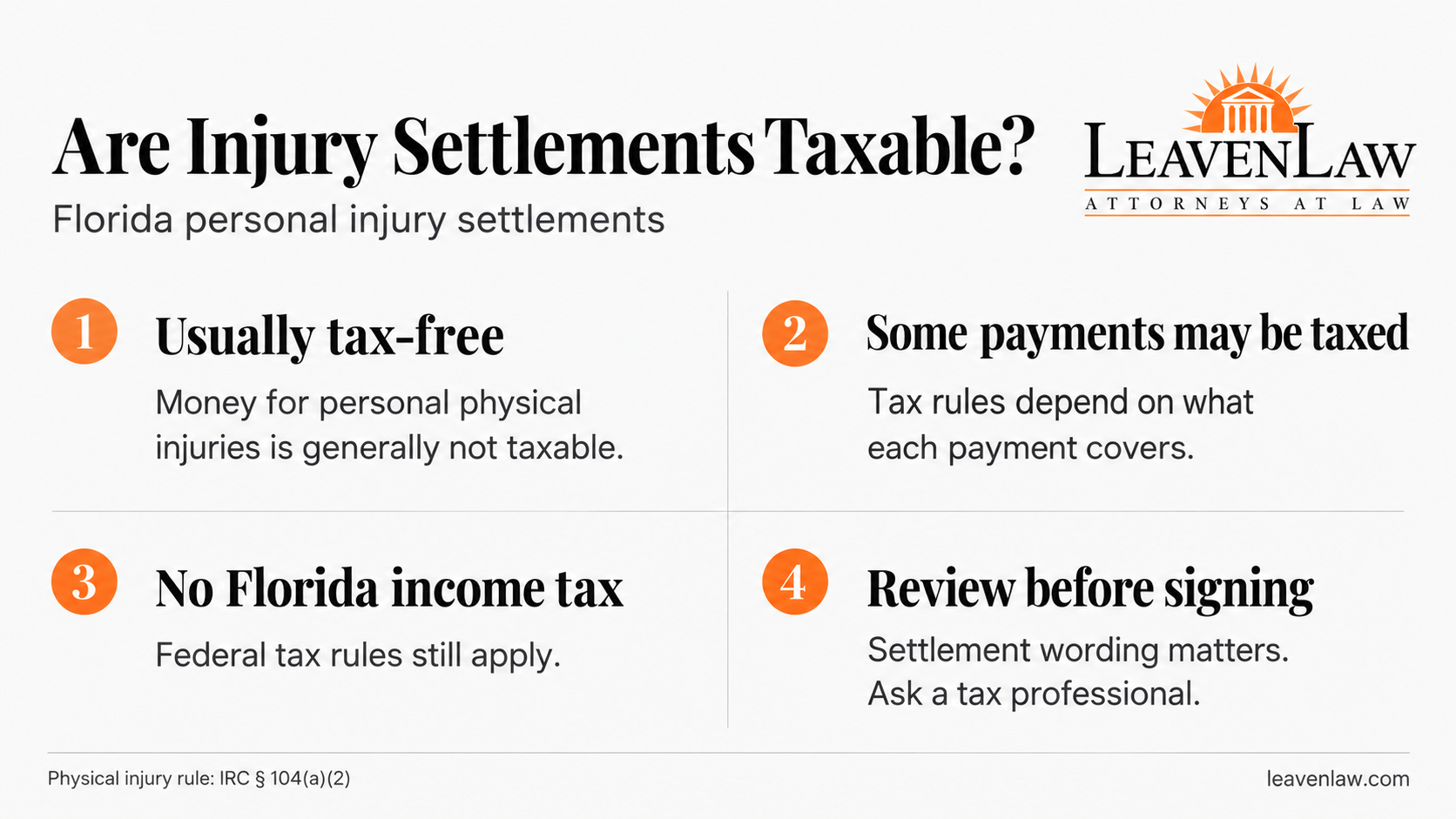
- Are personal injury settlements taxable? Under IRS Section 104(a)(2), money for personal physical injuries is generally not taxable.
- Some parts of a settlement may still be taxable, so the settlement tax rules depend on what each payment is for.
- Florida has no personal state income tax, so personal injury settlement taxes in Florida come down to federal rules.
- How a settlement is worded can matter, so ask a tax professional before you sign.
CONTACT US!

The Main Rule: Physical Injuries
Under section 104(a)(2) of the Internal Revenue Code, damages received on account of personal physical injuries or physical sickness are generally excluded from gross income. That means money you receive for a physical injury, like one from a car crash or a fall, is often not taxed by the IRS. This can include amounts for medical bills, pain and suffering and lost wages tied to that physical injury.
What Can Be Taxable?
Some parts of a settlement may be taxable. These can include:
- Punitive damages. These are generally taxable, even in a physical injury case.
- Interest. Interest on a judgment or settlement is generally taxable.
- Emotional distress without physical injury. These amounts may be taxable, except for related medical costs.
- Medical costs you already deducted. If you deducted medical expenses on a past return and then get repaid, that part may be taxable.
The IRS explains these rules in its guidance on settlements, including Publication 4345.
What About Florida Taxes?
Florida does not have a personal state income tax. So Florida residents generally do not owe state income tax on a settlement. Federal rules still apply.
Why the Settlement Wording Matters
How a settlement is described can matter. If an agreement shows what the money is for, it can help show which parts relate to physical injury. This is one reason to review settlement papers carefully before you sign.
| Part of a settlement | Generally taxable? |
|---|---|
| Physical injury damages | Often not |
| Medical bills for a physical injury | Often not |
| Lost wages tied to physical injury | Often not |
| Punitive damages | Yes |
| Interest | Yes |
| Emotional distress only | May be |
| Past deducted medical costs | May be |
Other Money That May Come Out of a Settlement
Taxes are not the only thing to plan for. A settlement may also need to repay certain liens. Health insurers, Medicare or Medicaid may have a right to be repaid for bills they covered. Attorney fees and case costs are also usually paid from the settlement. Ask how these will be handled so you know what you will receive.
A Simple Planning List
Keep your settlement papers. Note what each payment is for. Keep records of any medical costs you deducted in past years. Ask about any liens. Talk with a tax professional before you file your next return. Save all of it in one place.
A Simple Example
Say you are hurt in a car crash. You settle your claim. The money pays for your medical bills, your lost pay and your pain. Those parts are tied to a physical injury. They are often not taxed. Now say the settlement also includes interest. That part is often taxed. Each part can be treated in its own way.
What About Lost Wages?
This part can confuse people. Lost wages are often taxed when you earn them at work. But when they are part of a settlement for a physical injury, they are often not taxed. The key is the link to the physical injury. Ask a tax professional how this applies to you.
Emotional Distress Claims
Some claims are only about emotional harm. They do not come from a physical injury. These may be taxed. But money for medical care tied to that distress may not be. These rules are tricky. Get advice.
Will I Get a Tax Form?
Sometimes. A payer may send a tax form for some parts of a settlement, like interest or punitive damages. Keep any form you get. Give it to your tax preparer. Do not throw it away.
Structured Settlements
Some settlements are paid over time. This is called a structured settlement. For a physical injury case, these payments are often treated like a lump sum for tax purposes. Ask your lawyer and a tax professional about this option.
Plan Before You Spend
Do not spend the money right away. Take a little time. First, learn what you owe. Pay any liens. Set aside money for any tax. Then make a plan.
Questions to Ask
- What part of my settlement is for physical injury?
- Are there punitive damages or interest?
- Did I deduct medical expenses in past years?
- Are there liens to repay?
- Should I talk to a tax professional?
Common Mistakes to Avoid
- Assuming every dollar is tax-free
- Not keeping settlement papers
- Forgetting about past medical deductions
- Ignoring liens from health insurers
- Skipping advice from a tax professional
CONTACT US!
Get Answers About Your Settlement
So, are personal injury settlements taxable? Often, the part for physical injury is not, but other parts can be. LeavenLaw handles personal injury cases for clients in St. Petersburg, Pinellas Park, Seminole and across Florida. Learn about our personal injury practice. If you have questions about your injury claim, call LeavenLaw at (727) 327-3328 or contact us online to talk with our team.
This article is general information, not legal or tax advice. Talk with a qualified tax professional about your situation.
This article is general information about Florida law and is not legal advice. Reading it does not create an attorney-client relationship. Every case is different, and laws change. The hiring of a lawyer is an important decision that should not be based solely upon advertisements.
FAQ
Q: Are personal injury settlements taxable?
A: Damages for physical injuries are generally excluded from federal income. Some parts, like punitive damages and interest, are taxable.
Q: Is a car accident settlement taxable?
A: The part for physical injuries is often not taxable.
Q: Are punitive damages taxable?
A: Yes, generally.
Q: Does Florida tax settlements?
A: Florida has no personal state income tax.
Q: Should I talk to a tax professional?
A: Yes. Rules depend on your facts.